Method 4: Stealing Cookies
Cookies allow a website to store information on a user's hard drive and later retrieve it. These cookies contain important information that a hacker can sniff out and steal if they are on the same Wi-Fi network as the victim. They don't actually get the login passwords, but they can still access the victim's account.
From there, the hacker can click on the saved cookies and access the victim's account, as long as the victim is still logged in. Once the victim logs out, it is impossible for the hacker to access the account.
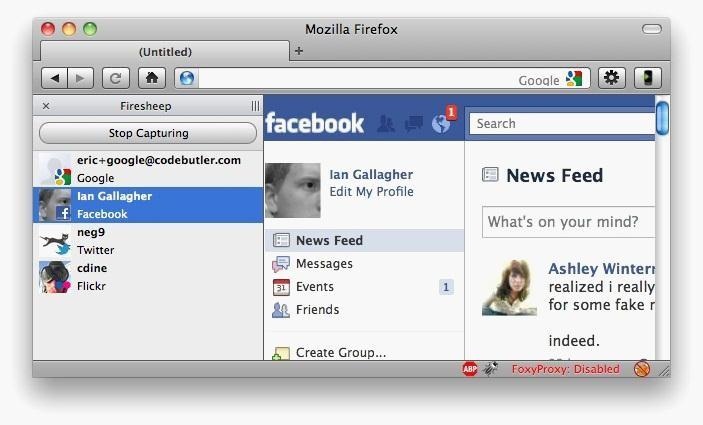
- On Facebook, go to your Account Settings and check under Security. Make sure Secure Browsing is enabled. Firesheep can't sniff out cookies on HTTPS, so try to steer away from HTTP.
- Full time SSL. Use Firefox add-ons such as HTTPS-Everywhere or Force-TLS.
- Log off a website when you're done. Firesheep can't stay logged in to your account if you log off.
- Use only trustworthy Wi-Fi networks. A hacker can be sitting across from you at Starbucks and looking through your email without you knowing it.
- Use a VPN. These protect against any sidejacking no matter what website you're on.
Protecting Yourself: Less Is More
Social networking websites are great ways to stay connected with old friends and meet new people. Creating an event, sending a birthday greeting and telling your parents you love them are all a couple of clicks away.Facebook isn't something you should steer away from, but you do need to be aware of your surroundings and make smart decisions about what you put up on your profile. The less information you give out on Facebook for everyone to see, the more difficult you make it for hackers.

No comments:
Post a Comment